
Exploring Which of Trafalgar’s European Travel Packages Fits Your Style?
Exploring Which of Trafalgar’s European Travel Packages Fits Your Style?
Posted on : June 28 2025 Posted by : Isabella Luis Posted in : Travel

Planning a multi-country Europe trip sounds romantic, but that is right up until you open ten tabs, start juggling train times, hotel reviews, museum tickets, and realise you’ve accidentally spent two hours just comparing airport transfers.
Planning a multi-country Europe trip sounds romantic, but that is right up until you open ten tabs, start juggling train times, hotel reviews, museum tickets, and realise you’ve accidentally spent two hours just comparing airport transfers.
That’s exactly where guided holidays behave like products rather than vague ideas. You’re not just buying a trip as they allow you to buy a complete, pre-designed experience with inclusions, pacing and routes that have already been tested on thousands of travellers.
In this blog, we’re looking at three of Trafalgar’s classic European itineraries as if they were products on a shelf:
- Imperial Europe: a 10-day grand sweep through Central Europe
- Highlights of Germany: an 8-day focus on German history, towns and castles
- Best of Scotland: a 7-day Scottish Highlands and cities circuit
All three include a Travel Director, driver, carefully selected hotels, and most breakfasts, so you’re mainly choosing where you want to go and how you like your days to feel.
A Big, Beautiful First Taste of Imperial Central Europe with a 10-Day Tour
Think of Imperial Europe as the “greatest hits” album of Central Europe. Over 10 days you travel through five countries that notably include Germany, Czech Republic, Slovakia, Hungary and Austria. Your tour will start and end in Munich, and you will visit Prague, Salzburg, Budapest and Vienna along the way.
You begin in Munich, which is a gentle place to start a European adventure with beer gardens, baroque churches and the busy Marienplatz giving you that Bavarian postcard feel without overwhelming you on day one. From there, the coach heads to Regensburg, a medieval town on the Danube with an old town that still feels wonderfully intact, and from there on, you cross into the Czech Republic and settle into Prague for two nights.
Prague is where the “imperial” in the name really starts to make sense as here you will see spires, bridges, castles and cobbled streets. With a local guide you get a structured walk through the Old Town Square, St. Vitus Cathedral and the castle precinct, so you’re not just wandering and hoping you stumble across the important bits.
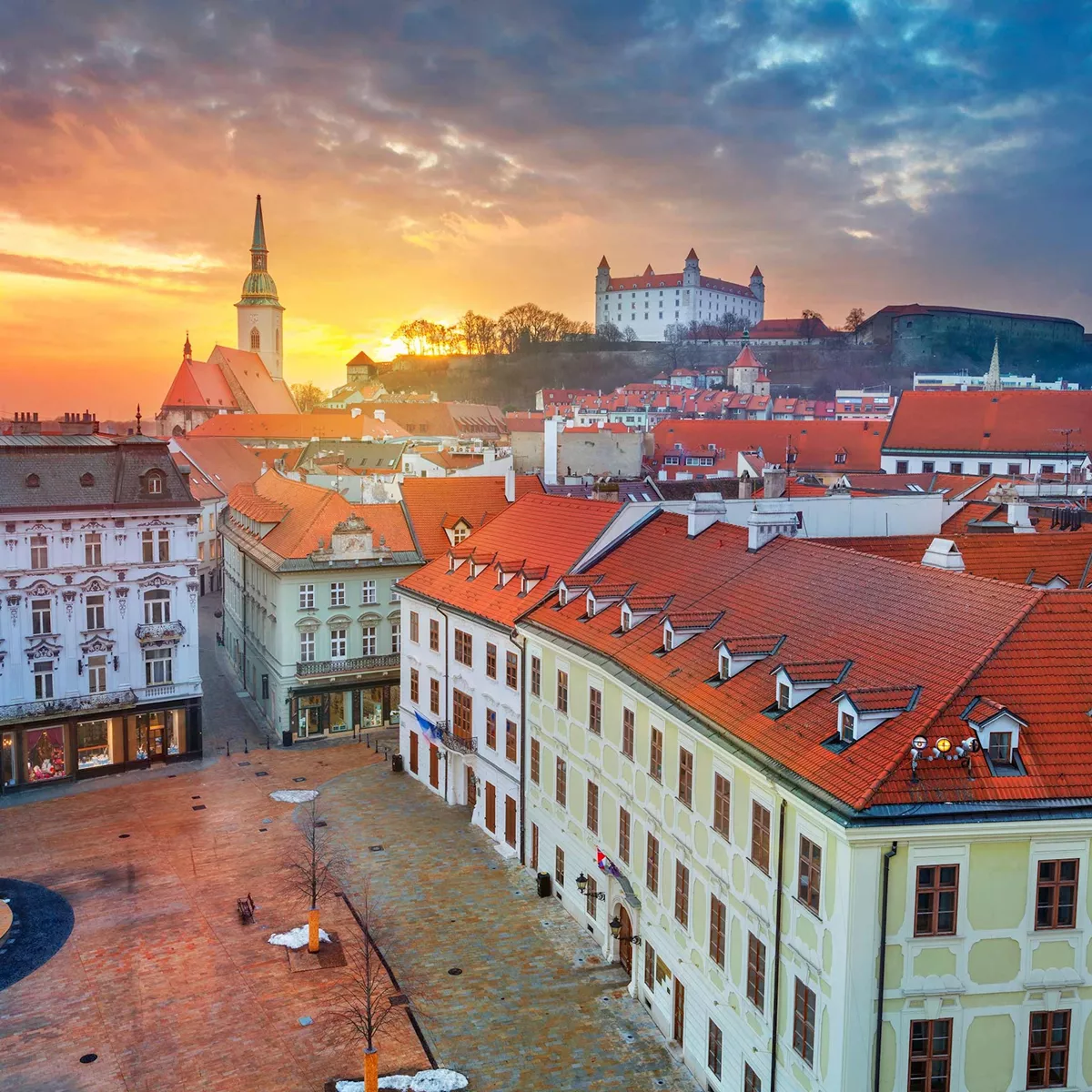
The route then sweeps south via Bratislava and Győr, before landing you in Budapest, often called the “Paris of the East”. Here you get Danube views, the Chain Bridge, the Parliament building and a taste of Hungary’s particular blend of Ottoman, Habsburg and 20th-century history. Trafalgar also leans into its signature hosted experiences on this tour. For example, dinner with a local family at their winery just outside Budapest is the kind of evening that’s very hard to organise on your own.
After Budapest, it’s on to Vienna, the heartbeat of Habsburg, and a legendary city filled with imperial boulevards, coffee houses and palaces. You will then move on to Salzburg, immersing yourself in its Sound of Music backdrops and alpine air, before finally circling back to Munich.
Thus, if your mental picture of Europe includes grand boulevards, river views and a different language every few days, “Imperial Europe” does a lot of that heavy lifting for you.
Highlights of Germany as One Country with Many Layers
A trip through Imperial Europe hops across borders, but “Highlights of Germany” is a package that lets you stay mostly within one country. Centered in depth instead of breadth, this is an 8-day itinerary that starts in Berlin and finishes in Munich, weaving through Dresden, Nuremberg, Rothenburg, the Black Forest and Neuschwanstein along the way.
You start off your journey in Berlin, a city where history is rooted in the museums, as well as under your feet, and on the walls. You’ll see landmarks like the Brandenburg Gate and the remains of the Berlin Wall, getting a clear sense of how the city has changed over the last century.
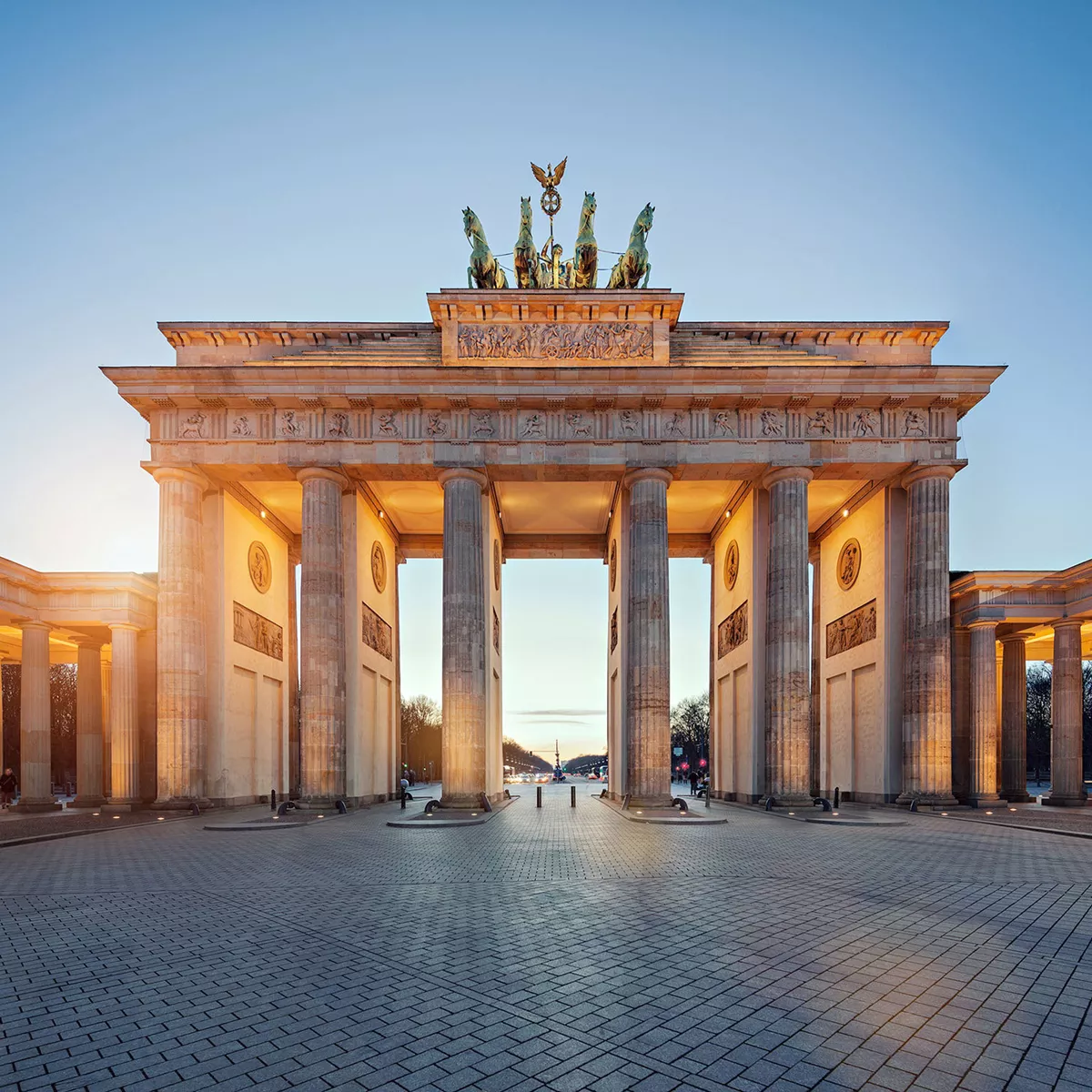
From Berlin, you carry on your journey through Dresden, which was once called the “Florence on the Elbe”, but is now a reconstructed baroque city with a heavy World War II story layered into its streets. The tour then makes its way to Nuremberg and the Bavarian town of Rothenburg ob der Tauber. This place is an almost too-perfect medieval town of half-timbered houses and intact walls that tends to stay in people’s memories long after the trip is over.
There’s also time in the Black Forest, where you see traditional crafts such as local cuckoo clocks and local woodwork, giving you an idea of how tourism and tradition coexist in this region.
The final act takes you through the Bavarian countryside to Neuschwanstein Castle, which is subject to ticket availability, especially in peak season, before finally ending in Munich, where beer halls, squares and art museums are all within reach.
Reading this flow of travel must have made you feel that this tour is much tighter and more thematic. You’re tracing Germany’s layers ensconced with medieval towns, baroque cities, the scars of war, and fairytale castles, without constantly crossing borders. This makes it particularly good if you’re drawn to history and architecture and want to see more than just one German city and a beer hall. It is the best package for you if you’ve been thinking “I want to see Germany properly, not just fly into Munich for Oktoberfest”, as “Highlights of Germany” is built exactly for that.
Best of Scotland with its Castles, Lochs and Highlands in One Week
Where the first two tours are very much about cities and imperial pasts, Best of Scotland is more about mood and landscape with a mix of cities, coasts, lochs and Highlands that give Scotland its particular magic. This is a 7-day itinerary that usually begins in Edinburgh and ends in Glasgow, looping through St Andrews, the Scottish Highlands, Loch Ness, the Isle of Skye region and Glencoe in between.
In Edinburgh, you get the contrast between the medieval Old Town and the Georgian New Town, plus the big-ticket sight which is the Edinburgh Castle. It sits on Castle Rock above the city, and walking the Royal Mile with a guide gives you context quickly. This means that instead of just seeing stone and cobbles, you hear about kings, writers and the odd ghost story.

From there, the itinerary takes you across the Firth of Forth to St Andrews which is full of golf, ruins, and sea air, and then into the Scottish Highlands. There are usually stops or views around Culloden, where you confront the Jacobite uprising history, and Loch Ness, where you’ll get the classic “eyes on the water, just in case” moment. Often you’ll see Eilean Donan Castle and the Sleat Peninsula on the Isle of Skye, where your camera roll will start to look like a travel brochure by default.
Later in the week you travel through Fort William, the Commando Memorial area and past Ben Nevis, then into Glencoe, whose beauty is undercut by the darker story of the 1692 massacre of the MacDonald clan. That contrast of wildly beautiful scenery with a complicated past is one of the reasons people fall hard for Scotland.
The journey ends in Glasgow, a city with a different energy to Edinburgh and that is enriched with more industrial history, more music, more contemporary edge.
You could absolutely build your own Europe or UK itinerary from scratch through Trafalgar. For some travellers, that’s half the fun. But if you’re short on time, travelling with family, or simply don’t want to spend your evenings buried in planning spreadsheets, a well-designed guided tour is a very practical product: the route, the hotels, the transfers, the key sights and a lot of the storytelling are folded into one purchase.
If one of these feels like the trip you keep saying you’ll do “one day”, this is your sign to move it from the someday list to the soon list. Use your booking or affiliate links, choose the itinerary that matches your travel style, and let someone else handle the coach, the hotels and the directions, so you can focus on actually being there.
You May Also Like

Keho The Secret To Longer Living
Modern research has proven that the Keto diet is a secret to living a longer, fuller, healthier life.

Top 10 Organic Moisturizers Safe for Babies
Discover the top 10 organic baby moisturizers made with safe, gentle ingredients like shea butter, calendula, and coconut oil. Perfect for keeping your baby’s delicate skin soft, smooth, and protected—naturally.

The Ultimate Guide to Choosing the Perfect Drinkware for Every Occasion
The options can seem endless when selecting the right drinkware for different occasions. From morning coffee routines to outdoor adventures and elegant dinner parties, having the appropriate drinkware enhances the experience and adds a touch of style to your moments.
Understanding Hair Growth Cycles Timing Your Waxing Sessions for Optimal Results
By syncing your waxing sessions with these cycles, you can enjoy longer-lasting smoothness and more effective hair removal while using best wax by crybaby.
